
Brokerage tax forms arrive together because the IRS requires one 1099 composite covering three documents: 1099-DIV for dividends and fund distributions, 1099-B for sales and their cost basis, and 1099-INT for interest — due to taxpayers by mid-February, though brokers routinely issue corrected versions through spring as fund companies reclassify late-year distributions. Reading them correctly is a February habit with an April payoff: mismatched numbers between your return and the IRS's copy of the 1099 are the most common audit-trigger category the agency's filing-season data shows. NewsJay publishes information and education, not tax advice.
What does each form actually report?
1099-DIV splits dividends into ordinary and qualified boxes — the qualified slice taxed at preferential capital-gains rates — plus capital-gain distributions from funds, which are long-term regardless of how briefly you held the fund. 1099-B reports each sale with proceeds, and for covered securities, the cost basis your broker reported to the IRS; noncovered positions — mostly old purchases — show proceeds only, leaving basis to your own records. 1099-INT lists interest from cash sweeps and bonds. Foreign tax paid, on the DIV, enables the foreign tax credit international fund holders can claim.
| Form | Reports | Common trap |
|---|---|---|
| 1099-DIV | Dividends, distributions | Assuming all dividends are qualified |
| 1099-B | Sales and basis | Noncovered lots with blank basis |
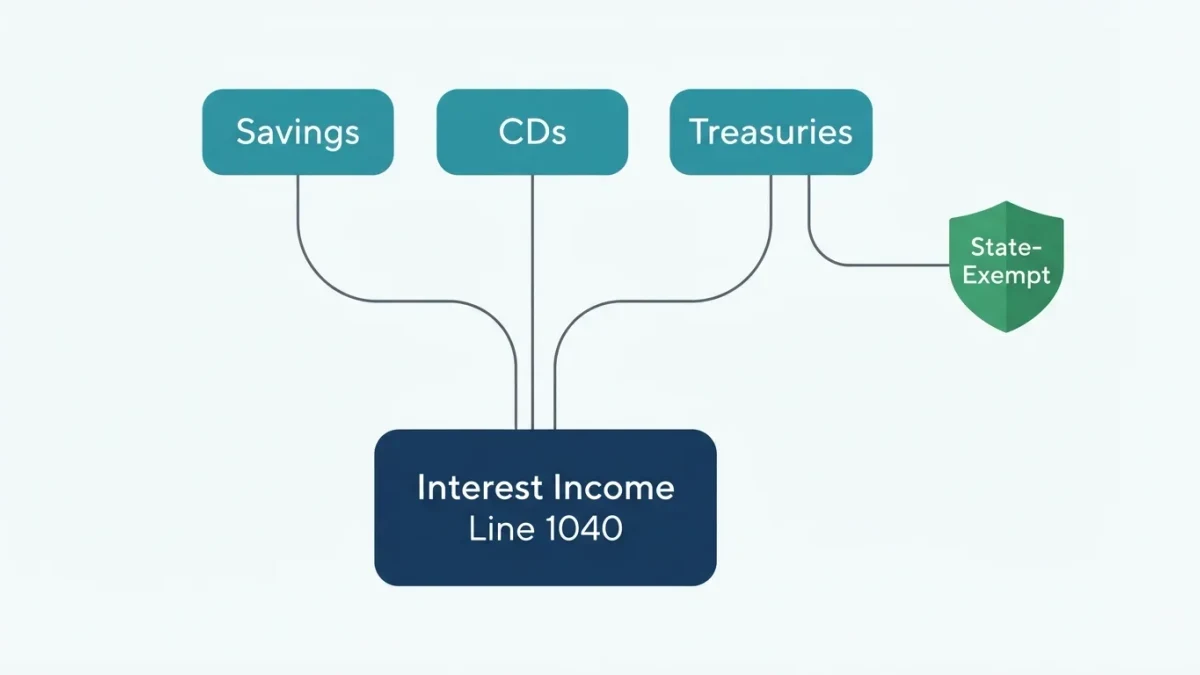
| 1099-INT | Interest income | Forgetting sweep interest is taxable |
| Corrected 1099 | Restated everything | Filing before the last correction |
Why do corrected forms keep arriving?
Because the reporting chain is long: funds finalize recharacterizations of year-end distributions through January and February, and each reclassification forces the broker to restate your composite. The practical consequence is scheduling — investors with fund-heavy taxable accounts are well served waiting until late February or March to file, checking the broker's corrections page first. Filing on the first envelope and amending later is the expensive version of the same patience.
How does cost basis actually work on 1099-B?
Covered securities — acquired after the broker-reporting mandates phased in from 2011 — carry basis the broker tracks and reports, with the default method usually first-in-first-out unless you specified lots at sale. Noncovered securities predate the mandates: the form shows proceeds and leaves basis to you, and the IRS's copy shows the same blank — meaning an unreported basis defaults to zero and the whole proceeds read as gain until you supply the real number. Records for old lots, including reinvested dividends whose basis is easy to lose, are the highest-value paperwork a taxable investor keeps.
What should the February review routine be?
An hour, four checks. Match every sale on 1099-B against your own trade log and lot method. Confirm dividend totals against account statements — brokers are accurate but not infallible, and the IRS matches against what was filed, not what was true. Verify wash sale adjustments, which appear on 1099-B where the broker applied them — and remember the broker only sees its own accounts. Then file after the last correction posts, or grant a preparer the same patience.
What about retirement accounts?
Nothing arrives, and that silence is the point: IRAs and 401(k)s generate no 1099s while money stays inside. The forms that do matter — RMDs reported on 5498s, early withdrawals on 1099-R — belong to distribution events, not investment income. A taxable account and its 1099s are the tax conversation; the retirement account's conversation happens at contribution, conversion, and withdrawal.
How do you reconcile the 1099 against your own records?
Reconciliation is the February hour's core work, and it runs line by line: every sale on 1099-B against the trade log's proceeds and basis; every dividend on 1099-DIV against the monthly statements' credit entries; interest on 1099-INT against the sweep program's rate changes. Discrepancies go to the broker's cost basis team with the statements in hand — brokers correct and reissue, which is precisely what the corrected-1099 machinery exists for. The investor who reconciles catches the errors that matter: a missing reinvestment's basis, a dividend posted in the wrong tax lot, a wash sale adjustment applied across accounts it should not span.
What are the special situations that change the forms?
Transfered-in positions carry their basis with them by rule, but the receiving broker sometimes needs statements to populate it — worth confirming the first January after any account move. Inherited positions step basis to the date-of-death value, and the 1099-B may show the original basis or none until the broker is notified of the step-up. Foreign withholding appears on the DIV and needs the credit's documentation. Corporate actions — spinoffs, mergers, splits — generate their own basis allocations the broker's 1099 may handle imperfectly. Each special situation is resolvable with paperwork; none resolves itself by April.
When should a professional take over?
The honest threshold is complexity, not income: a single brokerage account with wage income and standard investments is a self-file job the forms were designed for; multiple accounts, equity compensation, inherited positions, or a divorce-year restructuring justify paying someone whose February is already organized. The middle path — tax software with the broker's imported data plus one hour of self-reconciliation — covers most situations the forms generate. The one universal rule crosses all three paths: never file on the first envelope, and never file numbers that were not reconciled against something.
What is the one-sentence summary?
Reconcile every line against your own records, file after the last correction, and keep the basis paperwork the IRS does not have — because the forms describe what was reported, while the records describe what happened, and only the second number is yours to defend.
How long should you keep the records?
Until the assets are sold plus the audit window — basis records for open positions have no expiry, and closed-lot documentation belongs with seven years of tax files, a discipline that costs one folder and occasionally saves a five-figure dispute.
FAQ
When do 1099 forms arrive?
Brokers must furnish them by mid-February, with corrections commonly arriving through March for fund-heavy accounts. The disciplined practice is filing after the final correction, not after the first envelope.
What if my 1099-B is missing cost basis?
That lot is noncovered — the broker is not required to track it. You supply basis from your own records; without them, the IRS default treats proceeds as pure gain. Reconstructing old reinvestment records from broker history pages is worth the hour.
Are reinvested dividends taxed if I never took the cash?
Yes — reinvested dividends are taxed in the year paid, and each reinvestment adds to basis. Losing those records double-taxes the same dollars: once as income, again as unreported basis at sale.
Do I need the foreign tax paid box?
If you hold international funds in a taxable account, it enables a credit or deduction — usually a credit worth claiming. In tax-advantaged accounts the withholding simply disappears, one quiet argument for placing international equity in taxable.