
A three-fund portfolio holds a total US stock market index fund, a total international stock index fund, and a total bond market index fund — roughly 10,000 securities across most of the investable world, in three positions, at blended costs often below a tenth of a percent a year with today's index pricing. The construction's pedigree is long and its evidence base simple: broad diversification, minimal cost, and an allocation decision made once and maintained mechanically. NewsJay publishes information and education, not investment advice, and no specific funds are recommended.
What are the three sleeves?
The first sleeve holds essentially the entire US market — large caps through small, growth through value — eliminating single-company risk by breadth. The second holds developed and emerging markets abroad, converting home bias from a default into a chosen number. The third holds investment-grade US bonds across the yield curve, supplying the ballast and income that equities never promise. Each sleeve is internally complete: an investor who never leaves the three funds is never missing a major asset class in public markets.
How do you choose the split?
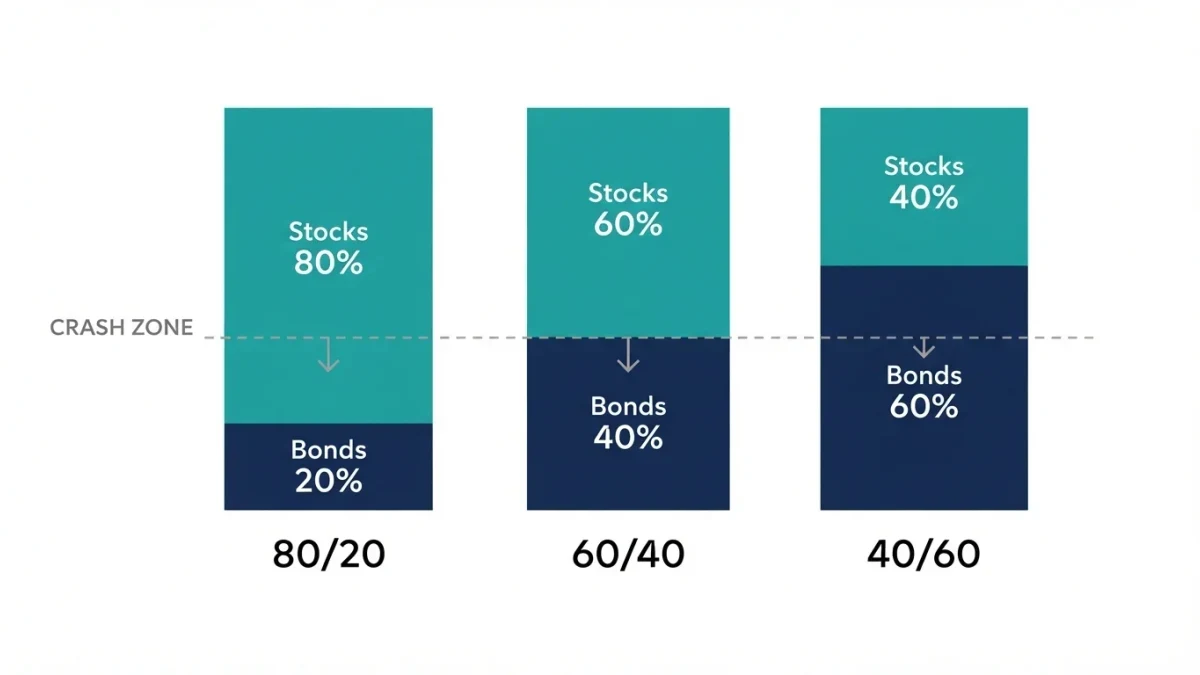
Only one number is genuinely yours to set: the stock-bond ratio, decided by horizon and risk tolerance — the same life-stage logic that governs any allocation. International then takes 20-40% of the equity side, a conventional band wide enough to be defensible at any point within it. A 30-year-old saver might land at 90% stocks split two-thirds domestic and one-third international, 10% bonds; a 60-year-old nearing retirement nearer 55% stocks, 45% bonds with the same international proportion of equity.
| Sleeve | Aggressive example | Moderate example |
|---|---|---|
| US total market | 54% | 36% |
| International total | 27% | 18% |
| Total bond market | 19% | 46% |
Examples are illustrations of arithmetic, not recommendations — the ratios trade risk against return exactly as any allocation does.
What are the actual assembly steps?
The build fits an afternoon.
- Open or choose the account — the construction works identically in taxable, IRA, or 401(k) where equivalent funds exist
- Identify one fund per sleeve at the provider, comparing nothing but expense ratio and index coverage, since broad index funds tracking the same market differ little else
- Set the target percentages in writing, dated, with the rebalancing rule — annual check, 5% bands
- Buy to target, or stage in over a chosen period if deploying a lump sum
- Automate contributions and, in taxable accounts, turn on automatic dividend reinvestment
Why stop at three?
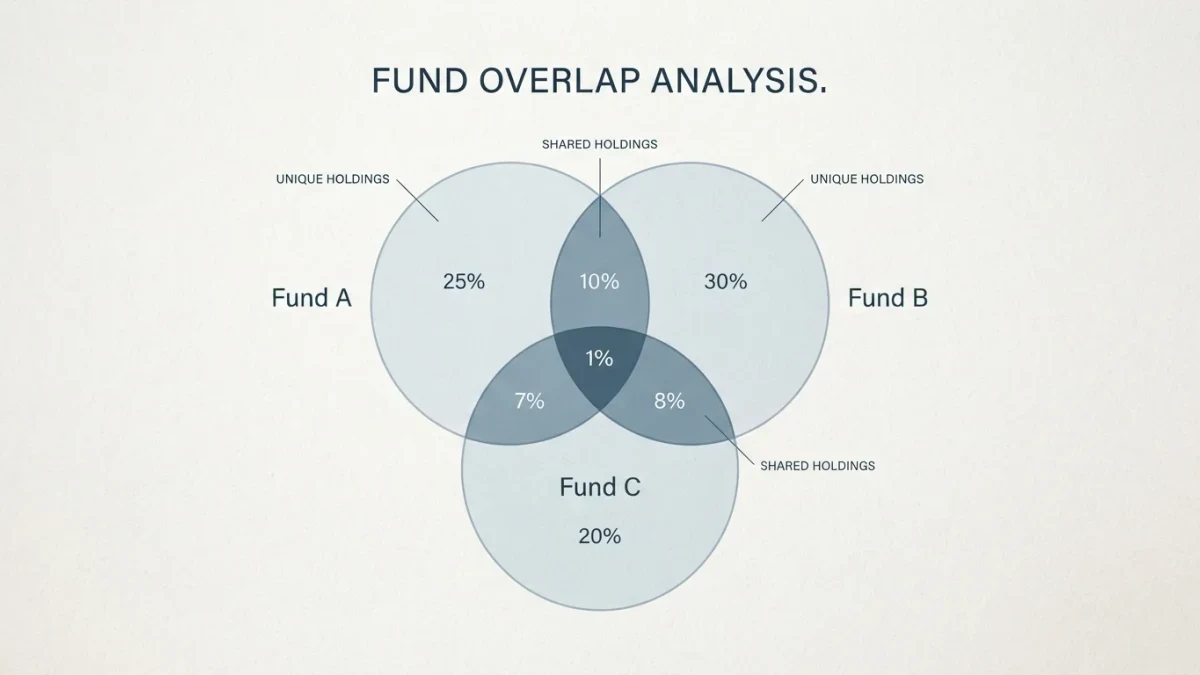
Because every additional fund after three answers a question the first three already answered. Additional sector or theme funds concentrate rather than diversify; multiple funds in the same sleeve add overlap and paperwork. The published record on simplicity is unglamorous and consistent: portfolios an investor can explain in one sentence are portfolios an investor holds through bad years, and holding through bad years is where most of the long-run return actually comes from. Complexity is occasionally justified as deliberate tilt; as drift, it is expensive.
What are the honest limitations?
Three funds exclude nothing public, but they hold no direct real estate beyond what equities embed, no commodities, and no private markets — exclusions most long-term savers can live with and some choose to revisit. The construction also presumes index tracking is acceptable behavior: an investor who genuinely wants to research companies needs a satellite sleeve beside the core, sized so mistakes stay survivable. And it demands the one skill no fund supplies — leaving it alone.
How does the portfolio handle major life changes?
The construction's resilience shows at life's edges: a new job changes contribution mechanics, not structure — the three funds exist in most 401(k) menus or equivalents; retirement changes the ratio, not the funds — the sleeves reverse their flow from deposits to withdrawals, with the bond sleeve supplying early distributions while equities keep compounding. Windfalls scale rather than complicate: a lump sum enters through the same staging decision any portfolio faces. The afternoon build's deepest virtue is that the plan's response to any event is a number — a new percentage, a new schedule — never a restructuring, which is why decades-old three-fund portfolios remain three-fund portfolios.
What mistakes do three-fund investors actually make?
The record of the community that popularized the construction is candid about failure modes: tinkering at the margins until a fourth and fifth fund erode the simplicity; abandoning the international sleeve after US outperformance, converting a designed choice into recency; letting the bond sleeve shrink through neglect until allocation drift does what deliberation never would; and the meta-mistake — treating the structure as a religion rather than a default, when circumstances that genuinely justify a tilt deserve one. The construction fails the way portfolios fail: not through architecture, but through the owner's edits. Writing the plan down, with the reasons, is the known antidote.
What does the evidence say about how these portfolios actually perform?
The honest answer is boring by design: blended broadly, a three-fund portfolio delivers the market's weighted return minus costs near the floor of what is available — which over decades has placed it ahead of most of the professional universe, per the persistent active-management underperformance record. It will never top any single year's league table, and its owners will watch some strategy or sector outperform it for years at a stretch. The construction's bet is that capturing the market's return, at near-zero cost, held for a career, is an outcome almost nothing else reliably delivers — a bet the record has consistently ratified.
What is the one-sentence summary?
Three funds, one ratio, one rebalancing rule: everything else in portfolio management is refinement of an afternoon's work that already captures the market's return at costs near the floor — the construction's whole claim, and the record's whole finding.
FAQ
Is three funds really enough diversification?
Yes — by count of underlying securities it is among the most diversified portfolios constructible: every public company in dozens of countries plus the core bond market. Diversification failure in such portfolios is behavioral, not structural.
Do I need the international fund?
It is the most commonly dropped sleeve, usually after US outperformance. The honest framing treats 0% international as a chosen home-country bet rather than a neutral default — defensible, but it should be decided, not drifted into.
Can I hold these three inside one fund?
Yes — balanced funds and target-date funds hold equivalents of all three sleeves in one wrapper, at modestly higher all-in cost in many cases, trading a basis point or two for never having to rebalance manually.
Which account should hold which fund?
Bonds are least tax-efficient, so tax-advantaged space goes to the bond sleeve first when accounts are mixed; international equity earns a small foreign tax credit in taxable accounts. These refinements matter at the margin — holding all three everywhere is not a failure.