
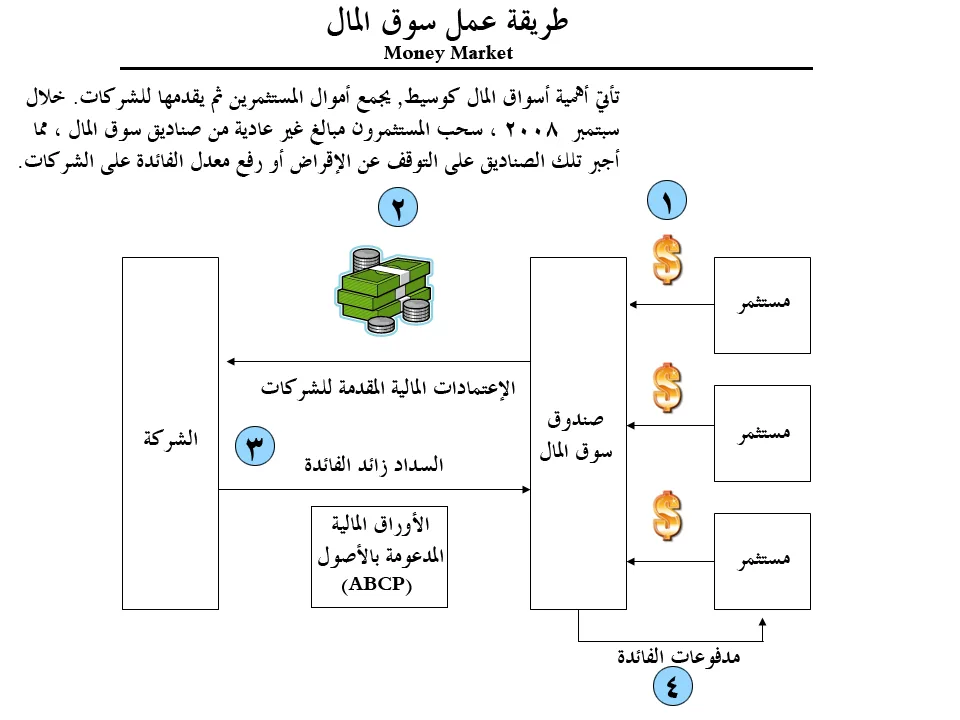
A money market fund is a mutual fund that holds liquid, short-term debt: Treasury bills, commercial paper, certificates of deposit, and cash equivalents, per the SEC's fund pages. The share price is managed to stay at a stable $1.00, per the SEC investor bulletin of Nov. 4, 2024, and the yield tracks short-term rates. It is a place to store cash, not to build a portfolio.
That single job explains both the appeal and the limits. The yield rises and falls with the rate cycle, and the balance does not grow the way a stock index does over decades. Investors who also hold Treasury bills directly will recognize the instruments inside. Below come the holdings, the pricing, the yields, and the right moments to use one, alongside this site's investing library.
What Does a Money Market Fund Hold?
Money market funds buy liquid, short-term debt securities and cash equivalents, per the SEC's money market funds page. Three categories cover the field. Government funds hold at least 99.5 percent of assets in cash, government securities, and fully collateralized repurchase agreements. Tax-exempt funds hold mostly municipal debt whose interest avoids federal tax. Prime funds buy short-term corporate and bank paper.
The category matters because the rules attach to it. Per the Nov. 2024 bulletin, the 99.5 percent test applies to government funds, while tax-exempt funds generally hold 80 percent or more in municipal securities with federally tax-exempt interest. Prime funds carry the most credit exposure. Readers following this should also see Tax-Loss Harvesting Rules Every Investor Knows.
Why Does the Share Price Stay Near a Dollar?
Most funds, including retail and government funds, use special pricing conventions that hold the net asset value at $1.00 per share, per the Nov. 2024 bulletin. Investors then buy and sell at that price any business day. Institutional prime and institutional tax-exempt funds are different; regulations require them to let the price float with market values.
The dollar price is a convention, not a promise. The bulletin notes that stable-NAV funds can still "break the buck" in stress, and that if short-term rates sit very low, fund fees can exceed the income the fund earns. Money in a money market fund also carries no FDIC insurance, because it is a fund, not a bank product, per the same bulletin.
How Does the Yield Compare With Savings and T-Bills?
A money market fund pays dividends that generally reflect short-term interest rates, and the yield changes as rates move, per the Nov. 2024 bulletin. Bank savings rates also move with policy rates but are set by each bank. Neither is fixed for long, so any yield snapshot expires quickly and past figures say little about the next cycle. We covered a connected angle in How to Start Investing With Little Money in 2026.
Against Treasury bills, the comparison is about packaging. The fund already holds paper much like the bills themselves, so its yield tends to sit near bill rates, minus the fund's expense deduction. Buying bills directly skips that fee layer but adds auction mechanics. The spread between the two options is usually small and moves both ways over time.
When Does Cash Belong in One?
Criteria first: horizon, purpose, and account type. Cash that must keep a stable value and stay reachable fits the tool. Specifically:
- An emergency reserve sits well here: stable pricing, daily access, and a yield that follows the rate cycle rather than a teaser rate.
- Uninvested brokerage cash often lands in one through sweep programs. Per the SEC bulletin of May 14, 2025, such sweeps move idle cash into money market funds, which are fund products without FDIC coverage.
- Money awaiting a dated purchase, such as a home deposit, fits the same logic.
- Money earmarked for decades of growth does not. A parking place cannot do an engine's job.
Watch the vocabulary at the bank counter, too. Per the May 2025 bulletin, a money market deposit account is a bank account with FDIC coverage up to legal limits, while a money market fund is a mutual fund with none. The names are close; the protections are not.
Conclusion: A Parking Place, Not a Destination
A money market fund stores cash at a steady $1.00 share price and pays a yield that shadows short-term rates, per SEC investor bulletins from 2024 and 2025. It suits reserves, sweeps, and dated spending plans. It does not suit growth money, and it does not carry bank insurance. Used for the right job, it earns its keep quietly; used as a portfolio, it just idles. Read the category before the yield.