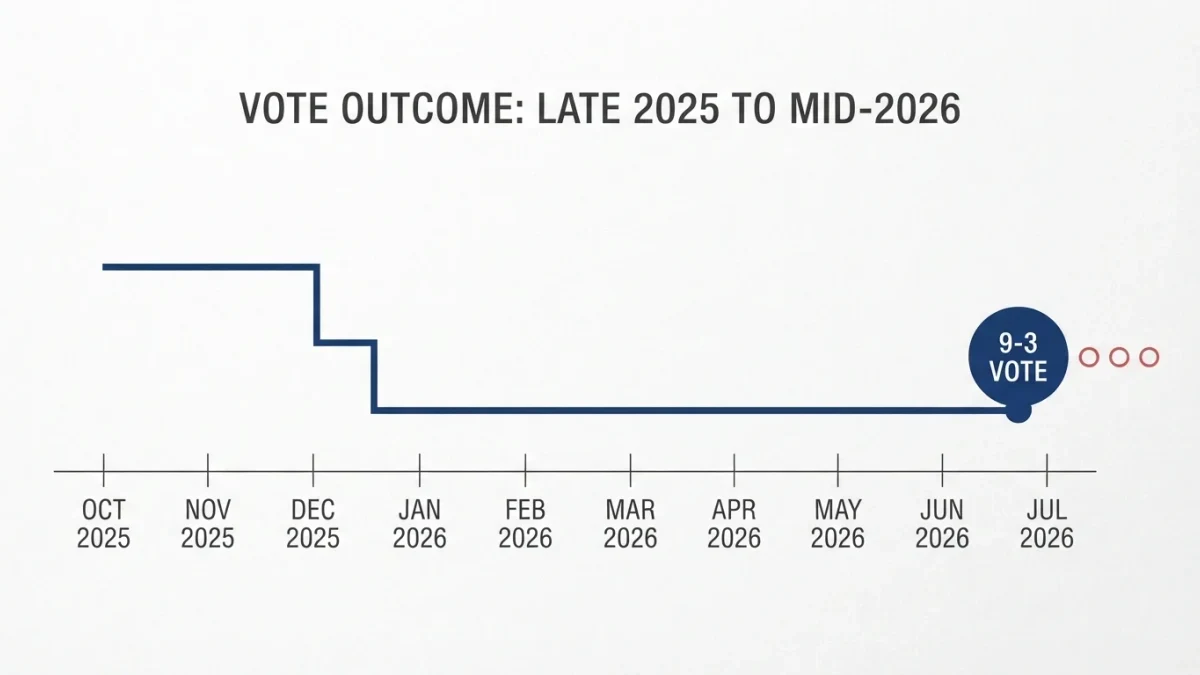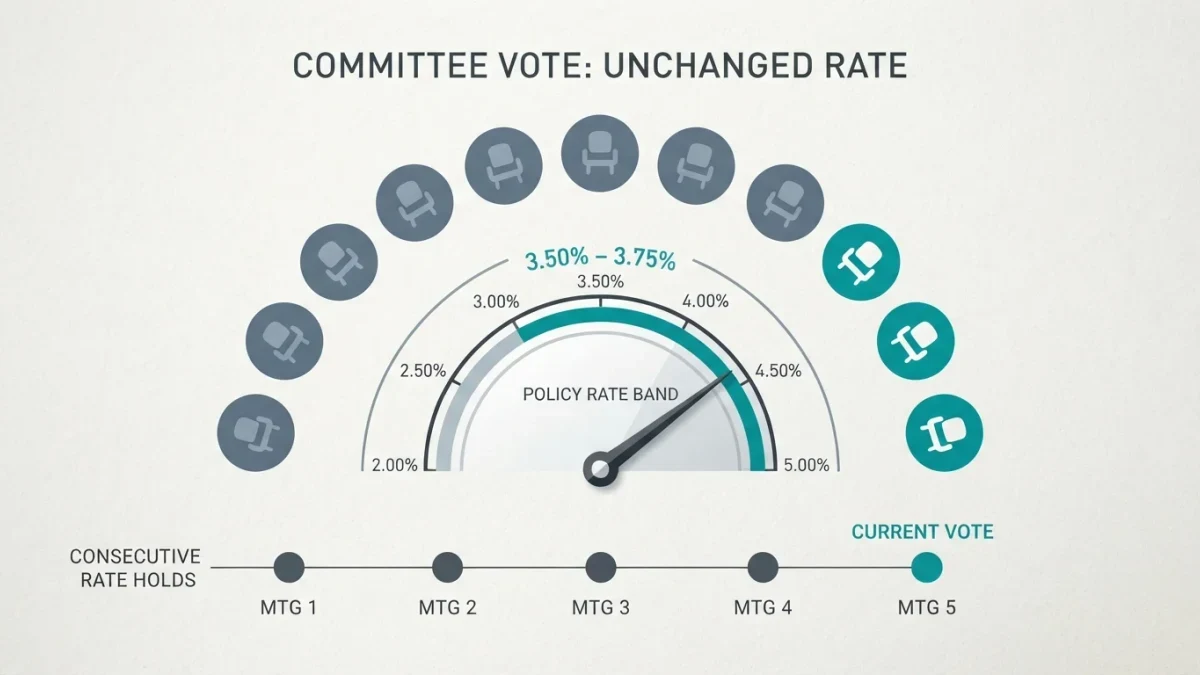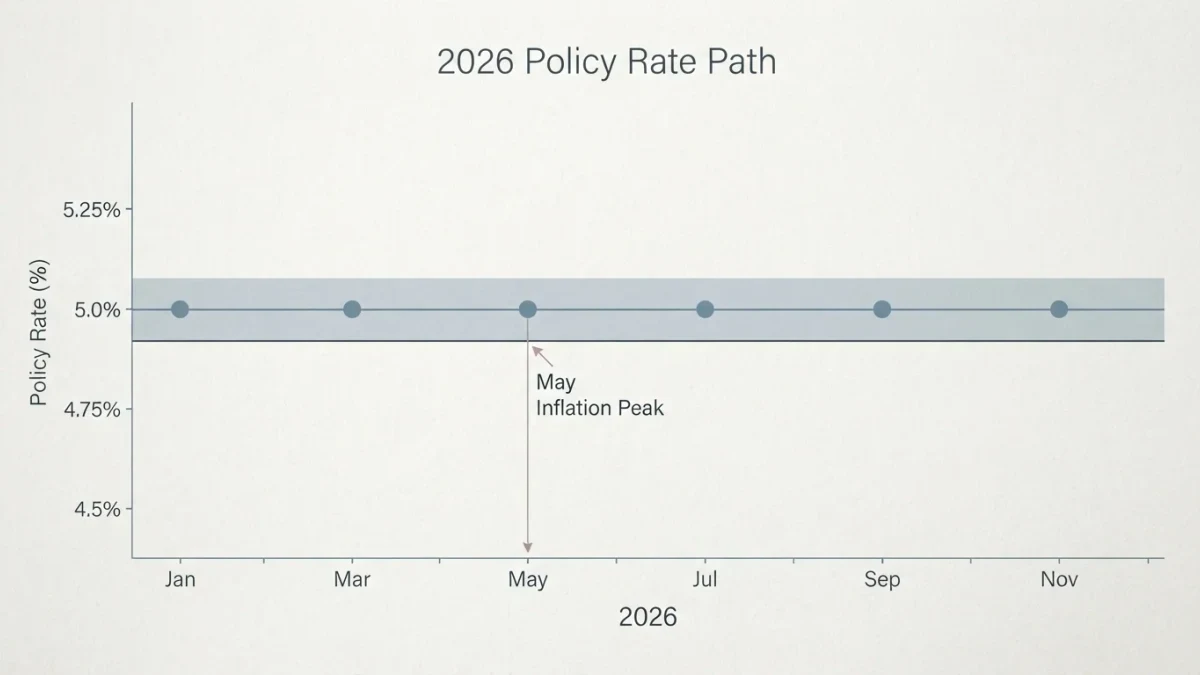
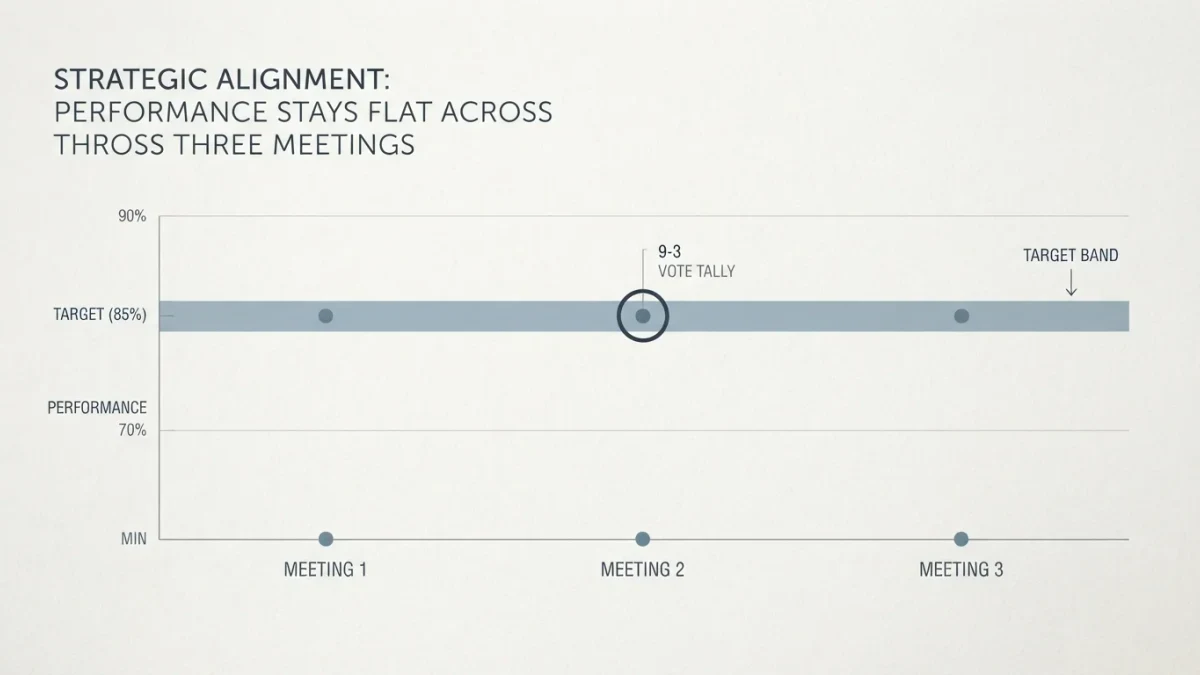
The Federal Open Market Committee held the federal funds target range at 3.50% to 3.75% on April 29, 2026, its second consecutive hold, and the vote fractured 9-3 — three dissents that mark the widest visible split of this pause, per the Federal Reserve's statement and Schwab's meeting coverage. The decision arrived two weeks after the March consumer price report showed annual inflation reaccelerating to 3.3% on an energy-driven spike. NewsJay publishes information and education, not investment advice.
The composition of the dissent matters more than its existence. A committee holding with multiple dissents is a committee whose members disagree about the next direction — and in this cycle the argument runs between inflation hawks unsettled by the spring reacceleration and members who read the energy spike as transitory. Chair Kevin Warsh has presided over the pause, per Yahoo Finance's coverage of the meetings.
What consecutive holds tell portfolios
A string of holds after an easing cycle historically signals a committee waiting for data it does not yet trust — and the 2026 data has argued both ways: January's 2.4% print and April's cooler moment, against March's 3.3% rebound. For portfolios, the implication is narrower than the commentary: policy rates near current levels anchor short-term yields, so cash and short bonds continue to pay meaningfully, while the debate itself keeps longer yields volatile. Neither observation changes an allocation; both explain why the bond market's pricing has swung with each release this spring.
What the dissent pattern means from here
Dissent patterns resolve one of three ways: convergence as data settles the argument, escalation toward a policy shift, or rotation as the committee's rotating voter seats change hands — all three are visible in advance through the published calendar and the speeches that fill the weeks between meetings. The long-term investor's stake in the question is real but indirect: policy uncertainty prices into bond yields, and calm or contention at the central bank is one input among several that determine the income a bond sleeve earns.
FAQ
Why do three dissents matter now?
Dissents this numerous usually coincide with genuine policy crossroads. Markets read dissent patterns for the direction of the next move — whether the minority argues for cuts or for vigilance — and price policy expectations accordingly.
When does the Fed meet next?
The committee's next scheduled decisions follow at roughly six-to-seven-week intervals through the year, per the Federal Reserve's published calendar, with the June meeting accompanied by updated economic projections.