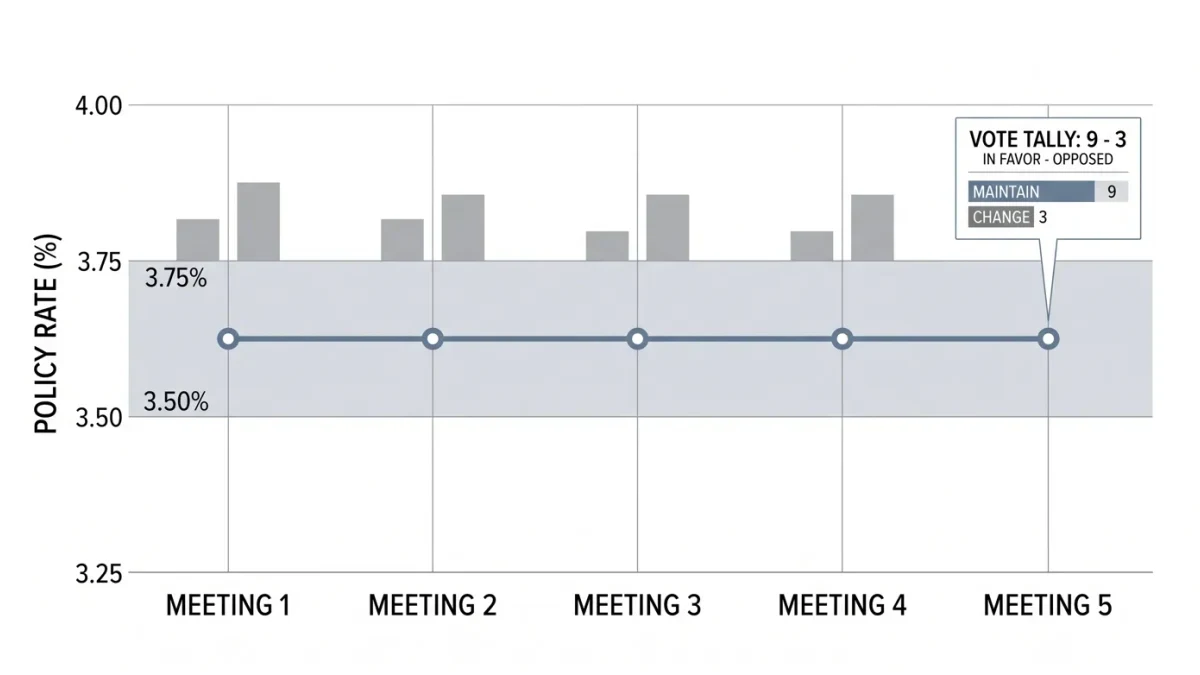
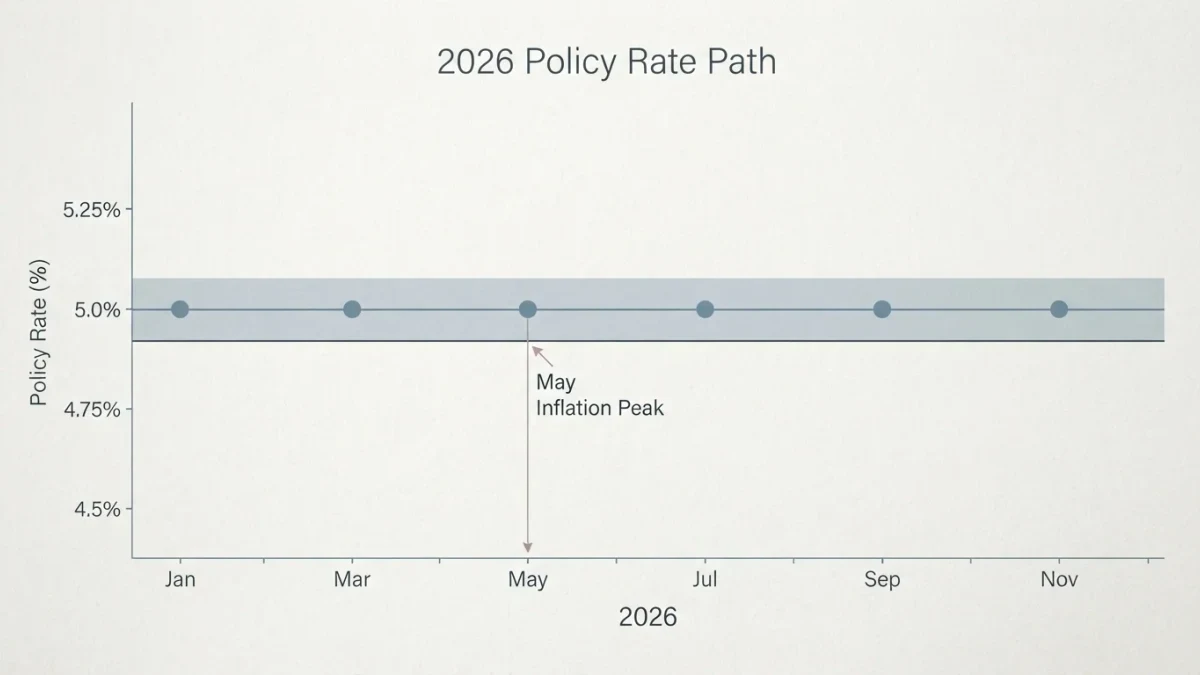
The Federal Open Market Committee kept the federal funds target range at 3.50% to 3.75% at its July 28-29, 2026 meeting, extending the pause across every scheduled meeting of the year so far, per the Federal Reserve's statements and meeting coverage. The July decision arrived with the committee's most recent inflation readings still elevated — May's 4.2% annual pace was the highest in three years — but with the spring spike's energy driver no longer accelerating. NewsJay publishes information and education, not investment advice.
The shape of 2026's policy year is now legible: a committee that began the year watching disinflation — January's consumer price print ran 2.4% — spent spring and summer holding against an energy-led rebound that crested in May, with internal disagreement visible in April's 9-3 vote. Markets spent the same months repricing the timing of eventual cuts, and the summer's question is whether the cooling visible after the peak persists into the autumn releases.
What a long pause means for portfolios
Extended holds are ordinary history, not gridlock: the committee is waiting for inflation evidence durable enough to justify easing, exactly as its statements have described all year. For long-term investors, a stable policy rate means cash and short-duration holdings continue to earn meaningful income — one of the quiet benefits of this cycle — while intermediate bonds' pricing already embeds the eventual path. The evidence-based posture through a pause is the same as through a cut cycle: allocation set by horizon, cash buffers set by need, and no repositioning based on meeting-by-meeting telemetry.
FAQ
Why hold all year if inflation is falling from its peak?
Because committees ease on sustained evidence, not turning points — one strong month after a three-year high is a start, not a trend. The pause's length itself signals how far inflation remains from the 2% objective.
What should bond investors take from the streak?
That current short-term yields are close to the policy rate and likely to remain so until the committee moves — a reasonable environment for laddering, and a reminder that locking intermediate yields is a judgment about the future the pause itself does not settle.