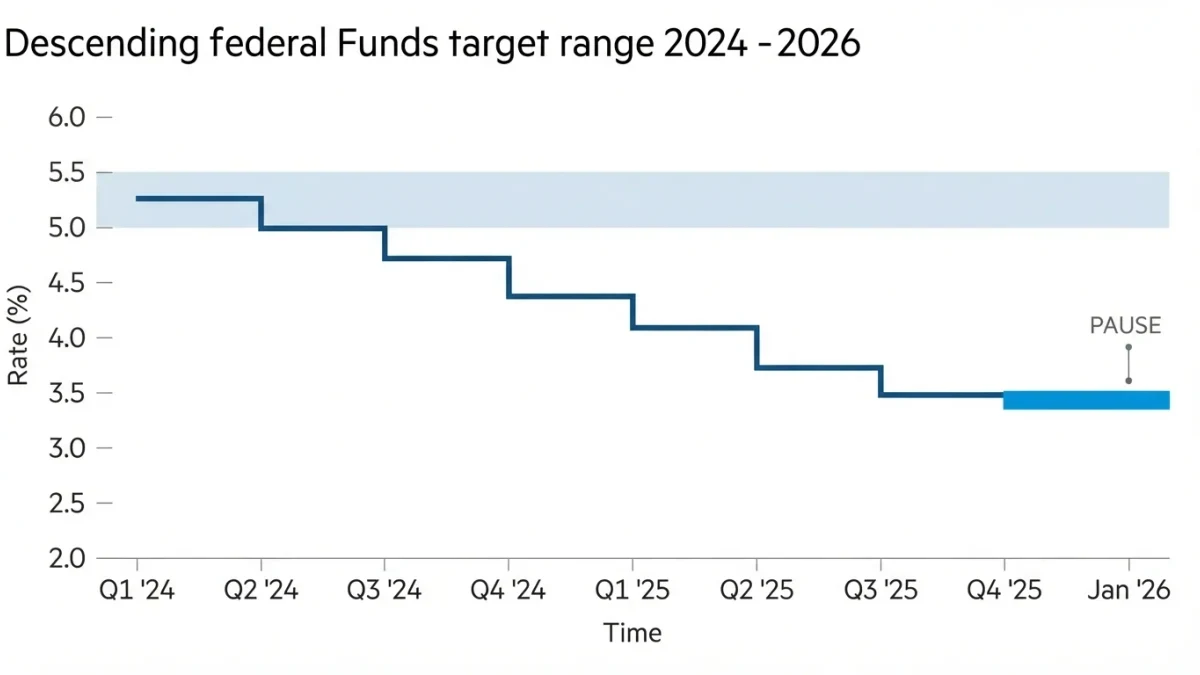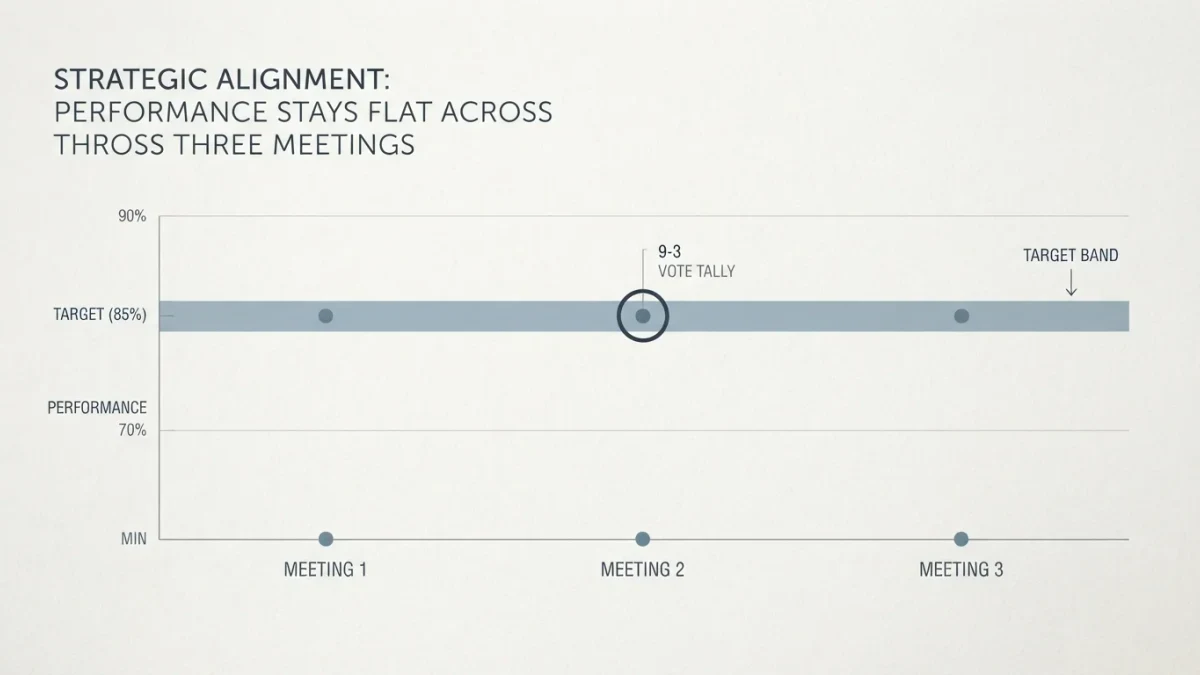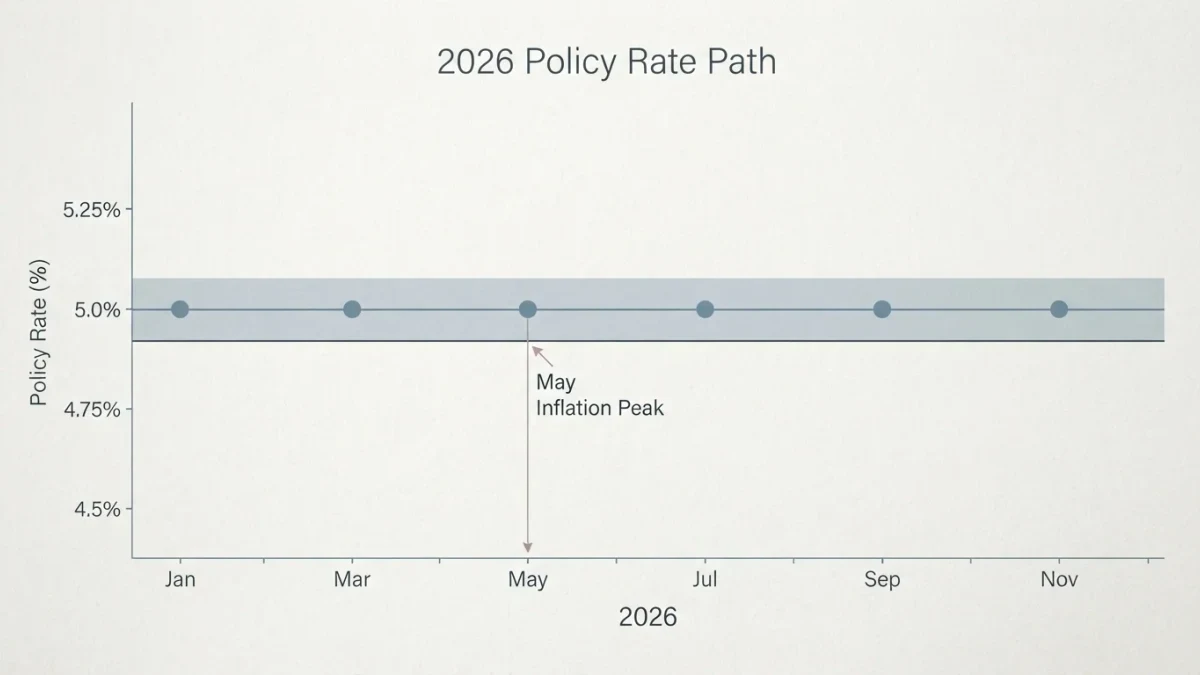
The Federal Open Market Committee left the federal funds rate target range unchanged at 3.50% to 3.75% after its March 18, 2026 meeting, per the Federal Reserve's official statement, with one dissenting vote on the decision. The committee described a divided posture — holding steady while monitoring whether the disinflation that produced January's cooler consumer-price print continues. NewsJay publishes information and education, not investment advice, and no rate decision changes a long-term allocation by itself.
The hold extended the pause that followed the easing cycle of the prior year. Coming a month after consumer prices rose 2.4% year over year in January 2026 — below expectations — the statement balanced progress on inflation against risks that warranted patience, per commentary from J.P. Morgan Asset Management and Schwab analysts on the decision. Dissents at this stage of a cycle typically signal the direction of internal debate rather than the next move's timing.
What the March meeting signals for portfolios
For bond holders, a steady policy rate keeps short-term yields anchored near current levels while the curve's longer end prices the eventual path — the reason intermediate bond yields often move more on expectations than on decisions. For equity investors, the durable point is narrower: a patient Fed with inflation near 3% removes neither risk. Historically, sustained pauses have accompanied both continued expansions and the run-ups to cuts that preceded recessions, which is why the evidence-based playbook responds to policy stasis with, precisely, stasis.
What comes next on the calendar
The committee's published schedule places the next decisions weeks apart through midyear, each with a statement and several with updated projections — the March meeting's summary of economic projections arrived alongside this decision, adding the committee's own growth and inflation views to the record. For long-term investors, the meetings are checkpoints on a process, not events to trade around, and the evidence-based habit remains the same one every release day teaches.
FAQ
What does a rate hold mean for savers?
Cash and money-market yields tend to track the policy rate closely, so a hold preserves current short-term yields rather than cutting them. Locking longer yields remains a choice about where rates go next, which a hold itself does not answer.
Why does one dissent matter?
Dissents map the committee's internal range — whether the argument is for faster cuts or continued patience. A single dissent signals live debate; consecutive dissents in the same direction have historically preceded policy shifts.